HSK 3.0 11000 CHINESE WORDS
1 汉语 Hànyǔ Chinese language, CL:門|门[men2] 1 汉字 Hànzì Chinese character, CL:個|个[ge4], Japanese: kanji, Korean: hanja, Vietnamese: hán tự 1 先生 xiānsheng doctor of Chinese medicine, Don, mulla, Ms., sir., teacher, gentleman, gospodin, Signor, signor, fortune-teller, babu, baboo, Herr, Mister, bey, mister, bwana, husband, siree, buckra, sirrah, senor, guv, sahib, Mr., rabbi, don, signore, Dan, sir, m'sieur, effendi, Tuan, baas, Monsieur, lording, monsieur, doctor, Mr, milord, Mynheer, signior, esquire, bookkeeper, Senor, rabboni, Senhor, sieur, sen 1 中文 Zhōngwén Chinese, Ch. (written) language, Ch. language, Sinitic 1 子 zi son, child, seed, egg, small thing, 1st earthly branch: 11 p.m.-1 a.m., midnight, 11th solar month (7th December to 5th January), year of the Rat, Viscount, fourth of five orders of nobility 五等爵位[wu3 deng3 jue2 wei4], ancient Chinese compass point: 0° (north), (noun suffix) 2 春节 Chūn Jié Spring Festival (Chinese New Year) 2 词 cí vocable, words, phrase, a kind of poetry originating in Tang dyn, statement, a form of classical poetry, part of speech, speech, Ci, Chinese poetry, term, word 2 读音 dúyīn pronunciation, literary (rather than colloquial) pronunciation of a Chinese character 2 普通话 pǔtōnghuà Mandarin (common language), Putonghua (common speech of the Chinese language), ordinary speech 2 中餐 zhōngcān Chinese meal, Chinese food, CL:份[fen4],頓|顿[dun4] 3 白菜 báicài Chinese cabbage, pak choi, CL:棵[ke1], 個|个[ge4] 3 华人 huárén Chinese, Ch. people 3 室 shì surname Shi, room, work unit, grave, scabbard, family or clan, one of the 28 constellations of Chinese astronomy 3 中华民族 Zhōnghuámínzú the Chinese nation, Ch. people 4 划 huà to cut, to slash, to scratch (cut into the surface of sth), to strike (a match), to delimit, to transfer, to assign, to plan, to draw (a line), stroke of a Chinese character 4 近代 jìndài the not-very-distant past, modern times, excluding recent decades, (in the context of Chinese history) the period from the Opium Wars until the May 4th Movement (mid-19th century to 1919), capitalist times (pre-1949) 4 量 liàng to measure, capacity, quantity, amount, to estimate, abbr. for 量詞|量词[liang4 ci2], classifier (in Chinese grammar), measure word 5 成语 chéngyǔ Chinese set expression, typically of 4 characters, often alluding to a story or historical quotation, idiom, proverb, saying, adage, CL:條|条[tiao2],本[ben3],句[ju4] 5 辞典 cídiǎn dictionary (of Chinese compound words), also written 詞典|词典[ci2 dian3], CL:本[ben3],部[bu4] 5 华语 Huáyǔ Chinese language 5 两岸 liǎngàn both sides of a river, both sides of the Taiwan Straits (I.e., Chinese Mainland and Taiwan) 6 道教 Dàojiào Taoism, Daoism (Chinese system of beliefs) 6 吉利 jílì Geely, Chinese car make, auspicious, lucky, propitious 6 净 jìng clean, completely, only, net (income, exports etc), (Chinese opera) painted face male role 6 中华 Zhōnghuá the Chinese nation, China 6 祖国 zǔguó country, China (used only by Chinese), mother_country, China, old_country, fatherland, home, country of origin, mother country, old country, homeland, native land, motherland, metropolis 7 丙 bǐng third of the ten Heavenly Stems 十天干[shi2 tian1 gan1], third in order, letter 'C' or roman 'III' in list 'A, B, C', or 'I, II, III' etc, ancient Chinese compass point: 165°, propyl 7 嫦娥 Chángé Chang'e, the lady in the moon (Chinese mythology), one of the Chang'e series of PRC lunar spacecraft 7 丁 dīng surname Ding, fourth of the ten Heavenly Stems 十天干[shi2 tian1 gan1], fourth in order, letter 'D' or roman 'IV' in list 'A, B, C', or 'I, II, III' etc, ancient Chinese compass point: 195°, butyl, cubes (of food) 7 繁体字 fántǐzì traditional Chinese character 7 方言 fāngyán the first Chinese dialect dictionary, edited by Yang Xiong 揚雄|扬雄[Yang2 Xiong2] in 1st century, containing over 9000 characters, topolect, dialect 7 粉丝 fěnsī bean vermicelli, mung bean starch noodles, Chinese vermicelli, cellophane noodles, CL:把[ba3], fan (loanword), enthusiast for sb or sth 7 国学 guóxué Chinese national culture, studies of ancient Chinese civilization, the Imperial College (history) 7 华侨 huáqiáo overseas Chinese 7 会意 huìyì combined ideogram (one of the Six Methods 六書|六书[liu4 shu1] of forming Chinese characters), Chinese character that combines the meanings of existing elements, also known as joint ideogram or associative compounds, to comprehend without being told explicitly, to cotton on, knowing (smile, glance etc) 7 豁 huō to play Chinese finger-guessing game, opening, stake all, sacrifice, crack, slit, clear, open, exempt (from), liberal-minded 7 简体字 jiǎntǐzì simplified Chinese character, as opposed to traditional Chinese character 繁體字|繁体字[fan2 ti3 zi4] 7 叫板 jiàobǎn to signal the musicians (in Chinese opera, by prolonging a spoken word before attacking a song), (coll.) to challenge 7 苦力 kǔlì bitter work, hard toil, (loanword) coolie, unskilled Chinese laborer in colonial times 7 亮相 liàng xiàng to strike a pose (Chinese opera), (fig.) to make a public appearance, to come out in public (revealing one's true personality, opinions etc), (of a product) to appear on the market or at a trade show etc 7 墨 mò learning, Chinese ink, ink stick, Mohist School, Mexico, Mohism, ink, handwriting, ink cake, Surname, China ink 7 旗袍 qípáo Chinese-style dress, cheongsam 7 竖 shù to erect, vertical, vertical stroke (in Chinese characters) 7 四合院 sìhéyuàn courtyard house (type of Chinese residence) 7 太极 tàijí the Absolute or Supreme Ultimate, the source of all things according to some interpretations of Chinese mythology 7 邪 xié demonic, iniquitous, nefarious, evil, unhealthy influences that cause disease (Chinese medicine) 7 矣 yǐ particle: used in classical Chinese to express exclamation 7 症结 zhēngjié hard lump in the abdomen (in Chinese medicine), crux of an issue, main point in an argument, sticking point, deadlock in negotiations 7 中国画 Zhōngguóhuà Chinese painting
ENGLISH 6000 THEME WORDS
Das Gemüse: Chinese cabbage Cải thảo
OXFORD 5000 CORE WORDS
TANAKA 6000 CORE WORDS
chinese

 Hán
Hán  Chinese
trung văn Chinese
[ trung ] : center, middle
[ văn ] : literature, letters, poetry; appearance, look

The Chinese leaders are arriving. Những nhà lãnh đạo Trung Quốc đang đến. Verbs 3
A Chinese man owns this airport. Một người đàn ông Trung Quốcsở hữu sân bay này. Verbs 3
Her ancestors are Chinese. Tổ tiên của cô ấy là người Trung Quốc. History
Tôi không biết tiếng Trung Quốc .

I don't understand Chinese .
Tôi không biết tiếng Trung Quốc 0
(ENG )
(NVI )
(SVI )
(0006)
Tôi biết chữ Hán này .

I know this Chinese character .
Tôi biết chữ Hán này .
(ENG )
(NVI )
(SVI )
(0278)
Cô ấy đang thực hành thư pháp bút lông của Trung Quốc .

She is practicing Chinese brush calligraphy .
Cô ấy đang thực hành thư pháp bút lông của Trung Quốc .
(ENG )
(NVI )
(SVI )
(0662)
Nhà Chu của Trung Quốc cổ đại sớm hơn nhà Tần vài trăm năm .
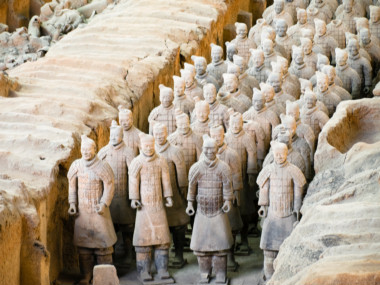
The ancient Chinese Zhou dynasty was several hundred years earlier than the Qin dynasty .
Nhà Chu của Trung Quốc cổ đại sớm hơn nhà Tần vài trăm năm .
(ENG )
(NVI )
(SVI )
(0681)
Cô ấy có thể tập Wushu Trung Quốc .

She can do Chinese Wushu .
Cô ấy có thể tập Wushu Trung Quốc .
(ENG )
(NVI )
(SVI )
(0861)
Ngôn ngữ chính thức của Trung Quốc là ngôn ngữ Hán (Trung Quốc) .

The official language of China is the Han language (Chinese) .
Ngôn ngữ chính thức của Trung Quốc là ngôn ngữ Hán (Trung Quốc) .
(ENG )
(NVI )
(SVI )
(0882)
Chữ Hán này có nghĩa là gì ?
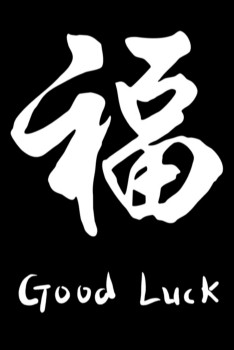
What does this Chinese character mean ?
Chữ Hán này có nghĩa là gì ?
(ENG )
(NVI )
(SVI )
(0939)
Hầu hết người Trung Quốc thích ăn bánh bao .

Most Chinese love to eat baozi .
Hầu hết người Trung Quốc thích ăn bánh bao .
(ENG )
(NVI )
(SVI )
(1144)
Người Hoa có tục thờ cúng tổ tiên .

The Chinese people practice the custom of ancestor worship .
Người Hoa có tục thờ cúng tổ tiên .
(ENG )
(NVI )
(SVI )
(1352)
甲 (jia) trong tiếng Trung tương tự như "A" trong tiếng Anh .

Chinese 甲 (jia) is analogous to A in English .
甲 (jia) trong tiếng Trung tương tự như A trong tiếng Anh .
(ENG )
(NVI )
(SVI )
(1680)
Người Trung Quốc có phong tục ăn bánh bao trong dịp năm mới .

Chinese traditionally eat jiaozi (dumplings) at the Chinese New Year .
Người Trung Quốc có phong tục ăn bánh bao trong dịp năm mới .
(ENG )
(NVI )
(SVI )
(1714)
Đây là những ký tự truyền thống của Trung Quốc .
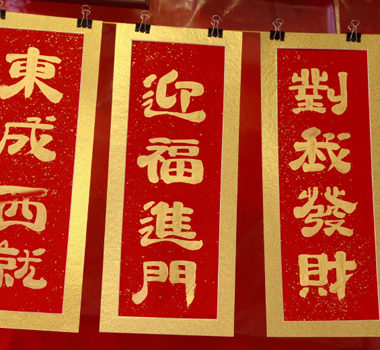
These are traditional Chinese characters .
Đây là những ký tự truyền thống của Trung Quốc .
(ENG )
(NVI )
(SVI )
(1716)
Người Trung Quốc gọi cha và mẹ của họ là "Diē" và "Niáng ."
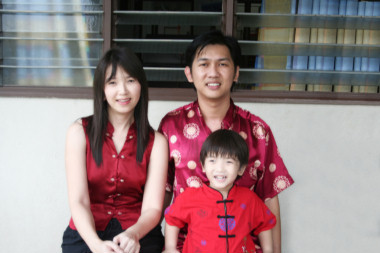
The Chinese call their father and mother Diē and Niáng .
Người Trung Quốc gọi cha và mẹ của họ là Diē và Niáng .
(ENG )
(NVI )
(SVI )
(2147)
Đồ ăn Trung Quốc nên ăn nóng .

Chinese food should be eaten hot .
Đồ ăn Trung Quốc nên ăn nóng .
(ENG )
(NVI )
(SVI )
(2465)
Đây là một ngôi chùa của Trung Quốc .

This is a Chinese temple .
Đây là một ngôi chùa của Trung Quốc .
(ENG )
(NVI )
(SVI )
(2648)
Cô ấy là Hoa kiều .

She is an overseas Chinese .
Cô ấy là Hoa kiều .
(ENG )
(NVI )
(SVI )
(2746)
Đây là một chiếc sedan cô dâu của Trung Quốc được sử dụng trong thời gian trước đây .

This is a Chinese bridal sedan as used in former times .
Đây là một chiếc sedan cô dâu của Trung Quốc được sử dụng trong thời gian trước đây .
(ENG )
(NVI )
(SVI )
(2981)
Kinh kịch Bắc Kinh là tinh hoa của văn hóa Trung Hoa .
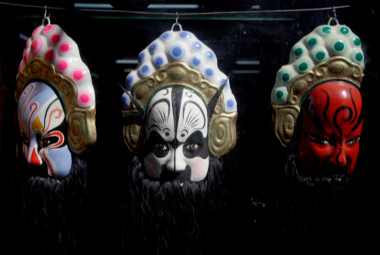
Beijing opera is the quintessence of Chinese culture .
Kinh kịch Bắc Kinh là tinh hoa của văn hóa Trung Hoa .
(ENG )
(NVI )
(SVI )
(3090)
Cô ấy là người Mỹ gốc Hoa (hay người Mỹ gốc Hoa) .

She is a Chinese American (or an American of Chinese ancestry) .
Cô ấy là người Mỹ gốc Hoa (hay người Mỹ gốc Hoa) .
(ENG )
(NVI )
(SVI )
(3122)
Bạn đã bao giờ thử món lạp xưởng Trung Quốc chưa ?
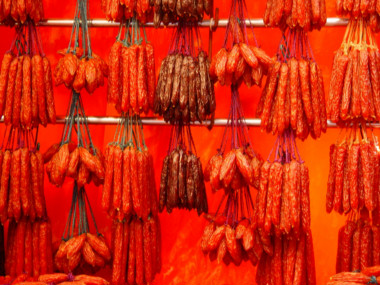
Have you ever tried Chinese sausage ?
Bạn đã bao giờ thử món lạp xưởng Trung Quốc chưa ?
(ENG )
(NVI )
(SVI )
(3231)
Tôi thích ăn các món ăn Trung Quốc, chẳng hạn như vịt quay Bắc Kinh .
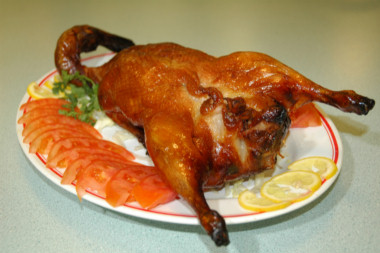
I love eating Chinese dishes , like Beijing roast duck , for instance .
Tôi thích ăn các món ăn Trung Quốc , chẳng hạn như vịt quay Bắc Kinh .
(ENG )
(NVI )
(SVI )
(3325)
Quả chà là Trung Quốc là một loại thực phẩm tốt cho sức khỏe .
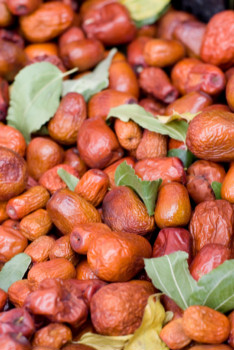
Chinese dates are a healthy food .
Quả chà là Trung Quốc là một loại thực phẩm tốt cho sức khỏe .
(ENG )
(NVI )
(SVI )
(3432)
Nu có nghĩa là "tiền" trong tiếng Trung cổ .

Nu meant money in ancient Chinese .
Nu có nghĩa là tiền trong tiếng Trung cổ .
(ENG )
(NVI )
(SVI )
(3485)
What do chinese people have for breakfast ?
Người Trung Quốc ăn sáng bằng gì?
My chinese did not pass .
tiếng trung của tôi đã không vượt qua .
My wife is chinese .
Vợ tôi là người Trung Quốc.
Hán Chinese trung văn Chinese [ văn ] : literature, letters, poetry; appearance, look
The Chinese leaders are arriving. Những nhà lãnh đạo Trung Quốc đang đến. Verbs 3
A Chinese man owns this airport. Một người đàn ông Trung Quốcsở hữu sân bay này. Verbs 3
Her ancestors are Chinese. Tổ tiên của cô ấy là người Trung Quốc. History
Tôi không biết tiếng Trung Quốc . | |||||
Tôi biết chữ Hán này . | |||||
Cô ấy đang thực hành thư pháp bút lông của Trung Quốc . | |||||
Nhà Chu của Trung Quốc cổ đại sớm hơn nhà Tần vài trăm năm . | |||||
Cô ấy có thể tập Wushu Trung Quốc . | |||||
Ngôn ngữ chính thức của Trung Quốc là ngôn ngữ Hán (Trung Quốc) . | |||||
Chữ Hán này có nghĩa là gì ? | |||||
Hầu hết người Trung Quốc thích ăn bánh bao . | |||||
Người Hoa có tục thờ cúng tổ tiên . | |||||
甲 (jia) trong tiếng Trung tương tự như "A" trong tiếng Anh . | |||||
Người Trung Quốc có phong tục ăn bánh bao trong dịp năm mới . | |||||
Đây là những ký tự truyền thống của Trung Quốc . | |||||
Người Trung Quốc gọi cha và mẹ của họ là "Diē" và "Niáng ." | |||||
Đồ ăn Trung Quốc nên ăn nóng . | |||||
Đây là một ngôi chùa của Trung Quốc . | |||||
Cô ấy là Hoa kiều . | |||||
Đây là một chiếc sedan cô dâu của Trung Quốc được sử dụng trong thời gian trước đây . | |||||
Kinh kịch Bắc Kinh là tinh hoa của văn hóa Trung Hoa . | |||||
Cô ấy là người Mỹ gốc Hoa (hay người Mỹ gốc Hoa) . | |||||
Bạn đã bao giờ thử món lạp xưởng Trung Quốc chưa ? | |||||
Tôi thích ăn các món ăn Trung Quốc, chẳng hạn như vịt quay Bắc Kinh . | |||||
Quả chà là Trung Quốc là một loại thực phẩm tốt cho sức khỏe . | |||||
Nu có nghĩa là "tiền" trong tiếng Trung cổ . | |||||
What do chinese people have for breakfast ? | Người Trung Quốc ăn sáng bằng gì? | My chinese did not pass . | tiếng trung của tôi đã không vượt qua .
My wife is chinese . Vợ tôi là người Trung Quốc. |