您在这儿有认识的人吗? คุณรู้จักใครที่นี่ไหม ครับ / คะ? Bạn có quen ai ở đây không? Kennen Sie hier jemand(en)? ¿Conoce (usted) a alguien aquí? Connaissez-vous quelqu’un ici ? Conosce qualcuno qui? Kent u hier iemand?
不,我在这儿不认识人。 ไม่ ผม / ดิฉันไม่รู้จักใครที่นี่ ครับ / คะ Không, tôi không quen ai ở đây. Nein, ich kenne hier niemand(en). No, aquí no conozco a nadie. Non, je ne connais personne ici. No, non conosco nessuno. Nee, ik ken hier niemand.
我是出租车司机。 เราเป็นคนขับรถแท็กซี่ Tôi làm lái xe taxi. Ich bin Taxifahrer (♀ Taxifahrerin). Yo soy taxista. Je suis chauffeur de taxi. Io sono tassista. Ik ben taxichauffeur (♀ taxichauffeur).
0269
I'm a teacher.
我 是 老师 。 เป็นครู Tôi làm giáo viên. Ich bin (ein) Lehrer. Yo soy profesor (♀profesora). Je suis ♂enseignant (♀enseignante). Faccio l'insegnante. Ik ben (een) leraar.
0284
Are you Australian? — No, I'm Canadian.
你 是 澳洲 人 吗 ?— 不 是 , 我 是 加拿大 人 。 เป็นคนออสเตรเลียรึเปล่า--เปล่า เป็นคนแคนาดา Em là người Úc đúng không? — Không, tôi là người Canada. Bist du Australier (♀ Australierin)? — Nein, Kanadier (♀ Kanadierin). ¿Eres australiano? — No, soy canadiense. Es-tu Australien ? — Non, je suis Canadien. Sei ♂australiano (♀australiana)? — No, sono canadese. Bent u Australiër (♀ Australiër)? - Nee, Canadees (♀ Canadees).
0311
Are you a teacher? — Yes, I am.
你 是 老师 吗 ?— 对 , 我 是 。 เป็นครูรึเปล่า--ใช่ เป็นครู Em làm giáo viên à? — Đúng. Bist du Lehrer (♀ Lehrerin)? — Ja, das bin ich. ¿Eres profesor? — Sí, lo soy. Es-tu ♂enseignant (♀enseignante) ? — Oui, je le suis. Tu sei insegnante? — Sì, sono insegnante. Bent u een leraar (♀ Leraar)? - Ja, dat ben ik wel.
0312
Terry worked in a bank from nineteen ninety-five (1995) to two thousand and one (2001).
泰瑞 从 一九九五 年 到 二零零一 年 之间 在 银行 上班 。 เทอรี่ทำงานที่ธนาคารตั้งแต่ปีสองห้าสามแปดถึงปีสองห้าสี่สี่ Terry làm việc trong ngân hàng từ năm một nghìn chín trăm chín mươi lăm (1995) đến năm hai nghìn không trăm linh một (2001). Terry hat von neunzehnhundert fünfundneunzig (1995) bis zweitausend eins (2001) bei einer Bank gearbeitet. Terry trabajó en un banco de mil novecientos noventa y cinco (1995) al dos mil uno (2001). Terry a travaillé dans une banque de mille neuf cents quatre-vingt-quinze (1995) à deux mille un (2001). Terry ha lavorato in banca dal millenovecentonovantacinque al duemilauno. Terry werkte bij een bank van negentienhonderd vijfennegentig (1995) tot tweeduizend een (2001).
0540
How much did it cost? - It cost forty (40) dollars.
花 了 多少 钱 ? — 花 了 美金 四十 元 。 ราคาเท่าไร--หนึ่งพันสามร้อยบาท Giá tiền là bao nhiêu? — Giá tám trăm nghìn đồng. Wie viel hat es gekostet? — Es hat vierzig (40) Dollar gekostet. ¿Cuánto costó? — Costó treinta euros. Combien ça a coûté ? — Ça a coûté trente euros. Quanto è costato? — È costato quaranta dollari. Hoeveel heeft het gekost? - Het kostte veertig (40) dollar.
0584
How long have you been a teacher?
你 当 老师 多久 了 ? เป็นครูมานานรึยัง Cô ấy làm giáo viên được bao lâu rồi? Seit wann unterrichtest du? > Wie lange bist du schon Lehrer (♀ Lehrerin)? ¿Cuánto tiempo hace que eres profesor (♀profesora)? Depuis quand es-tu enseignant ? Da quanto tempo sei insegnante? Hoe lang geef je al les? > Hoe lang bent u al leraar (♀ Leraar)?
0804
I've lived in Chicago since I was ten (10) years old.
我 十 岁 就 开始 住 在 芝加哥 了 。 เราอยู่เมืองชิคาโกมาตั้งแต่อายุสิบขวบ Tôi đã sống ở Chicago từ khi tôi mười tuổi. Ich wohne in Chicago seit ich zehn (10) Jahre alt bin. He vivido en Chicago desde que tenía diez años. Je vis à Chicago depuis que j'ai dix ans. Vivo a Chicago da quando avevo dieci (10) anni. Ik woon in Chicago sinds ik tien jaar oud was.
0823
Can I talk to you?
我 可以 跟 你 聊聊 吗 ? ขอคุยด้วยหน่อยได้มั้ย Tôi nói chuyện với em được không? Kann ich mit dir (Ihnen) sprechen? ¿Puedo hablar contigo? Puis-je te parler ? Posso parlarti? Kan ik je even spreken?
0975
Where is it?
在 哪里 ? อยู่ไหน Nó đâu? Wo ist sie? (Nachricht) ¿Dónde está? Où ça ? Dov'è? Waar is ze? (bericht)
1492
Are you a teacher? — No, I'm a doctor.
你 是 老师 吗 ? — 不 是 , 我 是 医生 。 เป็นครูรึเปล่า--เปล่า เป็นหมอ Em làm giáo viên đúng không? — Không, tôi làm bác sĩ. Bist du Lehrer (♀ Lehrerin)? — Nein, Arzt (♀ Ärztin). ¿Eres profesor (♀profesora)? — No, soy médico. Es-tu ♂enseignant (♀enseignante) ? — Non, je suis médecin. Sei insegnante? — No, sono medico. Bent u een leraar (♀ Leraar)? - Nee, ik ben een dokter.
1664
? I've lost it.
我 搞丢 了 。 เราทำหาย กุญแจ Tôi làm mất nó rồi. (chìa khóa) Ich habe ihn verloren. (Schlüssel) La he perdido. (llave) ? Je l'ai perdue. ? L'ho persa. Ik ben het kwijt. (Sleutel)
1862
I've known Mengjuan since two thousand and two (2002).
我 二零零二 年 就 认识 孟娟 了 。 เรารู้จักเมิงจวนตั้งแต่ปีสองพันสอง Tôi đã biết Mạnh Quyên từ năm hai nghìn không trăm linh hai (2002). Ich kenne Mengjuan seit zweitausendzwei (2002). Conozco a Mengjuan desde dos mil dos. Je connais Mengjuan depuis deux mille deux (2002). Conosco Mengjuan dal duemiladue. Ik ken Mengjuan sinds tweeduizend twee (2002).
我喜欢吃饺子。 Tôi yêu jiaozi (bánh bao nhân). ฉันชอบเจียวจือ (เกี๊ยวไส้) I love jiaozi (filled dumplings). Ich liebe Jiaozi (gefüllte Teigtaschen). Me encantan los jiaozi (dumplings rellenos). J'aime les jiaozi (boulettes farcies). Adoro i jiaozi (gnocchi ripieni). Ik hou van jiaozi (gevulde dumplings).
面包吃了一半。 (Cô ấy) đã ăn một nửa cuộn. (เธอ) ได้กินครึ่งม้วน (She) has eaten half of the roll. (Sie) aß die Hälfte des Brötchens. (Ella) se ha comido la mitad del bollo. (Elle) a mangé la moitié du petit pain. (Lei) ha mangiato metà del rotolo. (Ze at de helft van het broodje.
有人进去了。 Có người đã vào. มีคนเข้าไป Someone went in. Jemand ist hineingegangen. (oder; Jemand ist eingebrochen.) Alguien ha entrado. Quelqu'un est entré. Qualcuno è entrato. Iemand is naar binnen gegaan. (Of; Iemand heeft ingebroken.)
他们相互拥抱。 Họ ôm nhau. พวกเขากอดกัน They are hugging each other. Sie umarmen sich/ (einander). Se han abrazado. Ils se sont serrés l'un contre l'autre. Si sono abbracciati. Ze omhelzen elkaar.
员工要听从上司的指令。 Nhân viên nên tuân theo mệnh lệnh của cấp trên. พนักงานควรเชื่อฟังคำสั่งของผู้บังคับบัญชา Employees should obey their superior's orders. Die Mitarbeiter sollten den Anweisungen ihrer Vorgesetzten gehorchen. (Befehlen) Los empleados deben obedecer las órdenes de sus superiores. Les employés doivent obéir aux ordres de leur supérieur. I dipendenti dovrebbero obbedire ai loro ordini superiori. Werknemers moeten de bevelen van hun superieuren opvolgen. (Orders)
A traffic accident have taken place here. ((A traffic accident has occurred here.))
这里发生了交通事故。 Tại đây đã xảy ra một vụ tai nạn giao thông. ((Một vụ tai nạn giao thông đã xảy ra ở เกิดอุบัติเหตุจราจรที่นี่ ((มีอุบัติเหตุจราจรเกิดขึ้นที่นี่.)) A traffic accident have taken place here. ((A traffic accident has occurred here.)) Hier gab es einen Autounfall. (Hier gab es einen Autounfall.) Aquí se ha producido un accidente de tráfico. ((Aquí ha ocurrido un accidente de tráfico.)) Un accident de la route a eu lieu ici. ((Un accident de la circulation a eu lieu ici.)) Qui si è verificato un incidente stradale. ((Si è verificato un incidente stradale qui.)) Er was een auto-ongeluk hier. (Er was een auto ongeluk hier.)
The environment here is very pleasant (or This place is very charming).
这里的环境很宜人。 Môi trường ở đây rất dễ chịu (hoặc Nơi này rất quyến rũ). สภาพแวดล้อมที่นี่น่าอยู่มาก (หรือที่นี่มีเสน่ห์มาก) The environment here is very pleasant (or This place is very charming). Die Umgebung hier ist sehr angenehm (oder dieser Ort ist sehr charmant). El ambiente aquí es muy agradable (o Este lugar es muy encantador). L'environnement ici est très agréable (ou Cet endroit est très charmant). L'ambiente qui è molto piacevole (o questo posto è molto affascinante). De omgeving hier is erg aangenaam (of deze plek is erg charmant).
箱子倒了。 Chiếc hộp rơi xuống. กล่องตก. The box fell. Die Kiste fiel runter. (hinunter/ herunter) La caja se cayó. La boîte est tombée. La scatola è caduta. De doos viel naar beneden. (neer/omlaag)
The official language of China is the Han language (Chinese).
中国的官方语言是汉语。 Ngôn ngữ chính thức của Trung Quốc là ngôn ngữ Hán (Trung Quốc). ภาษาราชการของประเทศจีนคือ ภาษาฮั่น (ภาษาจีน) The official language of China is the Han language (Chinese). Die offizielle Sprache Chinas ist die Han-Sprache (Chinesisch). La lengua oficial de China es el idioma Han (chino). La langue officielle de la Chine est la langue Han (le chinois). La lingua ufficiale della Cina è la lingua Han (cinese). De officiële taal van China is de Han-taal (Chinees).
Young people try to be trendy (lit., "pursue the current fashion").
年轻人追求时尚。 Những người trẻ cố gắng trở nên hợp thời trang (thắp sáng, "theo đuổi thời trang hiện คนหนุ่มสาวพยายามที่จะอินเทรนด์ (จากคำว่า "ไล่ตามแฟชั่นปัจจุบัน") Young people try to be trendy (lit., "pursue the current fashion"). Junge Leute versuchen, trendy zu sein (wörtlich "die aktuelle Mode verfolgen"). Los jóvenes intentan estar a la última (lit., "seguir la moda actual"). Les jeunes essaient d'être à la mode (littéralement, "suivre la mode actuelle"). I giovani cercano di essere trendy (lett. "Inseguire la moda attuale"). Jongeren proberen trendy te zijn (letterlijk "de huidige mode te volgen").
Production is proceeding according to the (established) sequence.
生产按顺序进行。 Quá trình sản xuất được tiến hành theo trình tự (đã thiết lập). กำลังดำเนินการผลิตตามลำดับ (กำหนด) Production is proceeding according to the (established) sequence. Die Produktion erfolgt nach der (festgelegten) Reihenfolge. La producción se desarrolla según la secuencia (establecida). La production se déroule selon la séquence (établie). La produzione procede secondo la sequenza (stabilita). De productie geschiedt volgens de (vastgestelde) volgorde.
The child leans against the railing. ((The child leans on the railing.))
小孩靠在栏杆上。 Đứa trẻ dựa vào lan can. ((Đứa trẻ dựa vào lan can.)) เด็กพิงราวบันได ((เด็กเอนกายบนราง)) The child leans against the railing. ((The child leans on the railing.)) Das Kind lehnt sich gegen das Geländer. ((Das Kind stützt sich auf das Geländer.)) El niño se apoya en la barandilla. ((El niño se apoya en la barandilla.)) L'enfant s'appuie sur la balustrade. ((L'enfant s'appuie sur la balustrade.)) Il bambino si appoggia alla ringhiera. Het kind leunt tegen de reling. ((Het kind leunt op de reling.))
The mayor made an important announcement (lit., "solemnly/seriously announced a piece of information").
市长郑重宣布一项消息。 Thị trưởng đã đưa ra một thông báo quan trọng (lit., "trang trọng / nghiêm túc công b นายกเทศมนตรีประกาศสำคัญ (ตามตัวอักษร "ประกาศข้อมูลอย่างเคร่งขรึม") The mayor made an important announcement (lit., "solemnly/seriously announced a piece of information"). Der Bürgermeister machte eine wichtige Ankündigung (wörtlich: "feierlich / ernsthaft eine Information angekündigt"). El alcalde hizo un anuncio importante (lit., "anunció solemnemente/seriamente una información"). Le maire a fait une annonce importante (littéralement, "a annoncé solennellement/sérieusement une information"). Il sindaco ha fatto un annuncio importante. De burgemeester deed een belangrijke mededeling (letterlijk: "kondigde plechtig / ernstig een informatie aan").
She is a wonderful (kind-hearted and sensible) wife.
她是个贤慧的妻子。 Cô ấy là một người vợ tuyệt vời (tốt bụng và hợp lý). เธอเป็นภรรยาที่วิเศษ (ใจดีและมีเหตุผล) She is a wonderful (kind-hearted and sensible) wife. Sie ist eine wundervolle (gutherzige und vernünftige) Frau. Es una esposa maravillosa (de buen corazón y sensata). C'est une épouse merveilleuse (bienveillante et sensée). È una moglie meravigliosa (di buon cuore e sensibile). Ze is een geweldige (goedhartige en redelijke) vrouw.
The character 丙 ("bing") denotes the idea of "Number 3."
丙表示“第三”的意思。 Ký tự 丙 ("bing") biểu thị ý tưởng của "Số 3" อักขระ 丙 หมายถึงว่า 3 The character 丙 ("bing") denotes the idea of "Number 3." Das Zeichen 丙 ("bing") bezeichnet die Idee von "Nummer 3". El carácter 丙 ("bing") denota la idea de "Número 3". Le caractère 丙 ("bing") dénote l'idée de "Numéro 3". Il carattere 丙 ("bing") denota l'idea di "Numero 3." Het teken 丙 ("bing") duidt op het idee van "nummer 3".
There is a statue of the Marshal (commander-in-chief) in the square.
广场上有一座元帅的雕像。 Có một bức tượng của Nguyên soái (tổng tư lệnh) ở quảng trường. มีรูปปั้นจอมพล (ผู้บัญชาการทหารสูงสุด) อยู่ที่จัตุรัส There is a statue of the Marshal (commander-in-chief) in the square. Auf dem Platz steht eine Statue des Marschalls (Oberbefehlshaber). Hay una estatua del Mariscal (comandante en jefe) en la plaza. Il y a une statue du Maréchal (commandant en chef) sur la place. C'è una statua del maresciallo (comandante in capo) nella piazza. Er staat een standbeeld van de maarschalk (opperbevelhebber) op het plein.
The paper is covering her face (and blocking it from sight).
纸遮住了她的脸。 Tờ giấy đang che đi khuôn mặt của cô ấy (và che khuất tầm nhìn của nó). กระดาษกำลังปิดใบหน้าของเธอ (และปิดกั้นไม่ให้มองเห็น) The paper is covering her face (and blocking it from sight). Das Papier bedeckt ihr Gesicht (und blockiert es vor den Augen). El papel le está cubriendo la cara (y bloqueando la vista). Le papier couvre son visage (et l'empêche de voir). Il foglio le copre il viso (e gli impedisce di vedere). Het papier bedekt hun gezicht (en blokkeert het voor hun ogen).
She is a Chinese American (or an American of Chinese ancestry).
她是美籍华裔。 Cô ấy là người Mỹ gốc Hoa (hay người Mỹ gốc Hoa). เธอเป็นชาวอเมริกันเชื้อสายจีน (หรือชาวอเมริกันเชื้อสายจีน) She is a Chinese American (or an American of Chinese ancestry). Sie ist eine chinesische Amerikanerin (oder eine Amerikanerin chinesischer Abstammung). Es una china americana (o una americana de ascendencia china). Elle est une Américaine chinoise (ou une Américaine d'origine chinoise). È una cinese americana (o un'americana di origini cinesi). Zij is een Chinese Amerikaanse (of een Amerikaanse van Chinese afkomst).
She got herself a bowl of rice. (Lit., "She filled a bowl with rice.")
她盛了一碗饭。 Cô ấy kiếm cho mình một bát cơm. (Lit., "Cô ấy đổ đầy một cái bát với cơm.") เธอได้ชามข้าวให้ตัวเอง (ตัวอักษร "เธอใส่ข้าวเต็มชาม") She got herself a bowl of rice. (Lit., "She filled a bowl with rice.") Sie holte sich eine Schüssel Reis. (Lit. "Sie füllte eine Schüssel mit Reis.") Se ha comprado un cuenco de arroz. (Lit., "Ella llenó un tazón con arroz"). Elle s'est acheté un bol de riz. (Lit., "Elle a rempli un bol de riz.") Si è procurata una ciotola di riso. (Lett. "Ha riempito una ciotola di riso.") Ze haalde een kom rijst. (Lit. "Ze vulde een kom met rijst.")
He resents (lit., "considers it taboo") others saying he is fat.
他很忌讳别人说他胖。 Anh ấy bực bội với những người khác nói rằng anh ấy béo. เขาไม่พอใจ (ตามตัวอักษร "ถือว่าเป็นข้อห้าม") คนอื่น ๆ ว่าเขาอ้วน He resents (lit., "considers it taboo") others saying he is fat. Er ärgert sich (wörtlich: "hält es für tabu"), andere sagen, er sei fett. Le molesta (lit., "lo considera tabú") que los demás digan que está gordo. Il n'aime pas (littéralement, "considère que c'est tabou") que les autres disent qu'il est gros. Si risente (lett. "Lo considera tabù") altri che dicono che è grasso. Hij piekert (letterlijk, "vindt het taboe"), anderen zeggen dat hij dik is.
He is received commendation (for his brave deeds).
他得到了表彰。 Anh ấy được khen thưởng (vì những việc làm dũng cảm của mình). เขาได้รับคำชมเชย (สำหรับการกระทำที่กล้าหาญของเขา) He is received commendation (for his brave deeds). Er wird gelobt (für seine tapferen Taten). Recibe elogios (por sus valientes acciones). Il reçoit des éloges (pour ses actes courageux). Viene elogiato (per le sue azioni coraggiose). Hij wordt geprezen (voor zijn dappere daden).
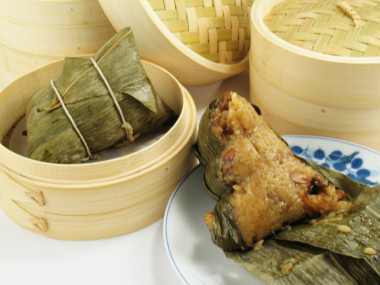
Eating "zongzi" [leaf-wrapped sticky rice dumplings] during the Dragon Boat Festival is a traditional custom .
端午节吃粽子是一种传统习俗。 Ăn "zongzi" [bánh bao gạo nếp gói bằng lá] trong Lễ hội Thuyền rồng là một phong tục การรับประทาน "zongzi" [เกี๊ยวข้าวเหนียวห่อใบ] ในช่วงเทศกาลเรือมังกรเป็นประเพณีดั้งเดิม Eating "zongzi" [leaf-wrapped sticky rice dumplings] during the Dragon Boat Festival is a traditional custom . Das Essen von "Zongzi" (mit Blättern umwickelte Knödel aus klebrigem Reis) während des Drachenbootfestivals ist ein trad Comer "zongzi" [bolas de masa de arroz pegajosas envueltas en hojas] durante el Festival del Bote del Dragón es una costumbre tradicional. Manger des « zongzi » [boulettes de riz gluant enveloppées de feuilles] pendant le festival des bateaux-dragons est une coutume traditionnelle. Mangiare "zongzi" [gnocchi di riso appiccicoso avvolti in foglie] durante il Dragon Boat Festival è un'usanza tradizionale. Het eten van "zongzi" (in bladeren gewikkelde dumplings van kleefrijst) tijdens het Drakenbootfestival is een traditioneel gebruik.
 [EN]
[EN]  [DE]
[DE]  [NL]
[NL]  [ES]
[ES]  [FR]
[FR]  [IT]
[IT]  [TH]
[TH]  [VI]
[VI]  [ZH]
[ZH]