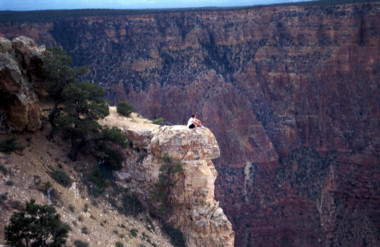
Tanaka6000 acknowledge Tanaka6000 | acknowledged Tanaka6000 | edge Tanaka6000 | knowledge Tanaka6000 | pledged
COMPOUND WORDS
| acknowledge | {v} | anerkennen | acknowledge | {v} | (to admit the claims or authority of) | acknowledge | {v} | (to admit the knowledge of) | acknowledge | {v} | (to notify receipt) | acknowledgement | {n} | (act of acknowledging) | acknowledgement | {n} | (act of a man admitting a child as his own) | acknowledgement | {n} | (act of owning or recognizing in a particular character or relationship) | acknowledgement | {n} | (award) | acknowledgement | {n} | (expression of thanks) | acknowledgement | {n} | (formal statement or document recognizing the fulfilment or execution of a legal requirement or procedure) | acknowledgement | {n} | (indication of a successful receipt of a transmission) | acknowledgement | {n} | (message informing that the originator's communication has been received and understood) | Czech hedgehog | {n} | (antitank obstacle) | double-edged sword | {n} | (idiomatic) | dredge | {n} | (dragnet) SEE: dragnet :: | dredge | {n} | (dredging machine) | edge | {n} | (an advantage) | edge | {n} | (boundary line of a surface) | edge | {n} | (in graph theory: any of the pairs of vertices in a graph) | edge | {n} | (joining line between two vertices of a polygon) | edge | {n} | (place where two faces of a polyhedron meet) | edge | {n} | (thin cutting side of the blade of an instrument) | edgeways | {adv} | (with the edge uppermost) | European hedgehog | {n} | (Erinaceus europaeus) | fledged | {adj} | (able to fly) | foreknowledge | {n} | (knowing beforehand) | full-fledged | {adj} | (having all its feathers; able to fly) | general knowledge | {n} | (wide body of information that a person acquires from education and from life) | get a word in edgeways | {v} | (get a word in edgewise) SEE: get a word in edgewise :: | hedge | {n} | (thicket of bushes planted in a row) | hedge fund | {n} | (unregistered investment fund) | hedge garlic | {n} | (Alliaria petiolata) SEE: garlic mustard :: | hedgehog | {n} | (animal) | knowledge | {n} | (awareness, state of having been informed) | knowledge | {n} | (fact of knowing about something; understanding, familiarity with information) | knowledge | {n} | (Sexual intercourse) SEE: carnal knowledge :: | knowledgeable | {adj} | (having knowledge, especially of a particular subject) | knowledge is power | {proverb} | (knowledge is power) | ledge | {n} | (cornice) | ledge | {n} | (layer) | ledge | {n} | (lintel) | ledge | {n} | (lode) | ledge | {n} | (of rocks) | ledge | {n} | (shelf) | ledger | {n} | (collection of accounting entries) | ledger line | {n} | (notation to inscribe notes outside the musical staffs) | pledge | {n} | (solemn promise) | pledge | {v} | (to deposit something as a security; to pawn) | pledge | {v} | (to make a solemn promise) | sedge | {n} | (any plant of the genus Carex) | sedge warbler | {n} | (Acrocephalus schoenobaenus) | self-knowledge | {n} | (knowledge or insight into one's own nature and abilities) | sledge | {n} | (sledgehammer) SEE: sledgehammer :: | sledge | {n} | (sleigh or sled) | sledgehammer | {n} | (kind of hammer) | straightedge | {n} | (tool used to draw, cut or check the straightness of straight lines) | theory of knowledge | {n} | (epistemology) | to one's knowledge | {adv} | (to one's knowledge) | two-edged sword | {n} | (double-edged sword) SEE: double-edged sword :: | wedge | {n} | (simple machine) | wedge | {v} | (to force into a narrow gap) | wedge-tailed eagle | {n} | (eaglehawk) SEE: eaglehawk ::
5000 WORDS
| L048 | P1716 | edge | der Rand | 边
|